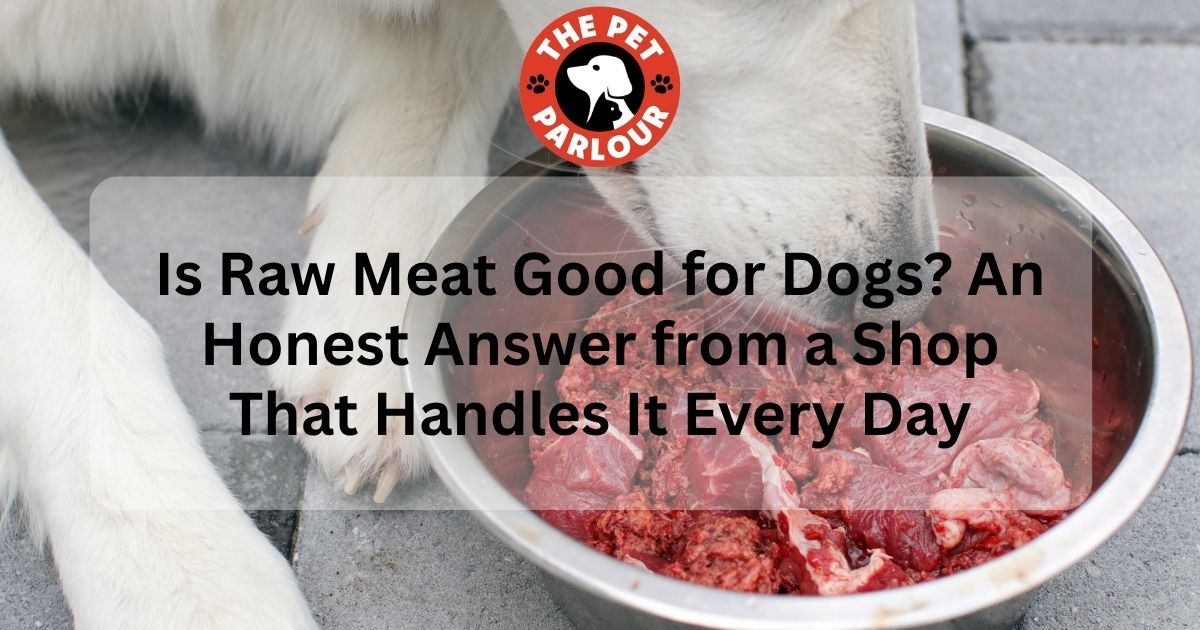
Is Raw Meat Good for Dogs? An Honest Answer from a Shop That Handles It Every Day
If you ask this question online, you’ll find two camps shouting past each other. One side will tell you raw meat is the cure for everything short of a flat tyre. The other will tell you you’re endangering your family. We’ve been selling, storing, handling and feeding raw dog food for over a decade — and the honest answer sits in neither camp.
So rather than adding to the shouting, let’s take the question apart properly. Because “is raw meat good for dogs?” is really three questions wearing one coat: is it nutritionally sound, is it safe, and is it right for your dog?
Is raw meat nutritionally sound for dogs?
A dog’s digestive system is built for meat — short gut, acidic stomach, teeth designed for shearing rather than grinding. A complete raw diet built on muscle meat, bone and offal supplies protein, fats, calcium, phosphorus and the micronutrients a dog needs, in a form dogs are biologically equipped to use. On the nutrition question, the answer is a straightforward yes — with one very important word doing the work: complete.
A bowl of supermarket mince is not a raw diet. Meat alone is deficient in calcium and a string of other nutrients, and a dog fed nothing but muscle meat will run into trouble over time. This is where a good deal of the criticism of raw feeding genuinely comes from: studies that found home-made raw diets to be nutritionally unbalanced were, more often than not, looking at exactly this — well-meaning owners improvising in the kitchen. A properly formulated complete raw food, made to the same nutritional standards as any other complete dog food, is a different thing entirely.
What we actually see in the shop
We should be upfront about what kind of evidence this is: it’s experience, not a clinical trial. But twelve years of the same conversations does add up to something. The pattern customers describe when they move a dog onto a complete raw diet is remarkably consistent — firmer, smaller stools, less odour, shinier coats, calmer stomachs in dogs that have struggled for years. We’ve written about the changes owners report in more detail before, and we stand over every word of it — while being straight with you that the large, long-term controlled studies that would settle the argument scientifically haven’t been done yet, in either direction.
The case against — taken seriously
You’ll have seen that some veterinary bodies, including the American Veterinary Medical Association, discourage raw feeding. Their concern is not that meat is bad for dogs — it’s pathogens. Raw meat can carry Salmonella, Listeria, E. coli and Campylobacter. That’s not scaremongering; it’s simply true, and it’s true of the raw chicken breast in your own fridge as well. The question is not whether those bacteria exist, but whether the risk is managed — and whether it’s managed in your kitchen.
Two points deserve an honest airing. First, dogs themselves handle bacterial loads far better than we do — that acidic stomach again — and healthy adult dogs on properly handled raw diets rarely have any difficulty. The more meaningful risk is to the humans in the house, through poor hygiene: contaminated surfaces, bowls, and hands. Second, reputable raw manufacturers producing complete diets operate under EU pet food and animal by-product regulations, with pathogen testing as part of the process. The freezer aisle of a specialist shop and a bowl of scraps from the butcher are not the same risk profile.
Where the risk actually lives
Pull the genuine problems out of the noise and they cluster in two places: unbalanced home-made diets, and sloppy handling. Both are fixable. Buy complete, professionally formulated raw food rather than improvising, and treat it with the same kitchen discipline you’d apply to raw chicken for your own dinner:
- Keep raw food frozen until needed and defrost it in the fridge, in a sealed container, on the bottom shelf.
- Use it within the manufacturer’s stated time once defrosted — don’t refreeze thawed food.
- Wash bowls, utensils and surfaces with hot soapy water after every meal, and your hands after every handling.
- Use a stainless steel or ceramic bowl rather than plastic, which scratches and harbours bacteria.
- Lift what the dog doesn’t eat — raw food is not for grazing on all day.
Follow that and you’ve addressed the substance of nearly every legitimate objection to raw feeding.
So — is raw meat good for dogs?
Our answer, after more than a decade of handling it daily and feeding it to our own dogs: yes — when it’s a complete, properly produced raw diet, handled with basic kitchen hygiene, fed to a suitable dog. That’s not as tidy as a slogan, but it has the advantage of being true. If you’re thinking of making the change, start with our guides on switching your dog to a raw diet, how much raw food to feed and what age to transition — or start at the beginning with our complete guide to raw dog food.
Frequently asked questions
Is raw meat safe for dogs to eat?
Yes — a complete, professionally produced raw diet, kept frozen, defrosted in the fridge and served with clean bowls and hands, is safe. The main risks come from long term unbalanced home-made diets and poor kitchen hygiene, both of which are avoidable.
Can dogs get salmonella from raw meat?
It’s possible but uncommon in healthy dogs, whose acidic stomachs cope with bacteria far better than ours. The greater practical risk is to people in the household through contaminated surfaces and bowls, which is why hygiene matters more than fear.
Why do some vets advise against raw feeding?
Mainly because of pathogen risk and because studies of home-made raw diets have found many to be nutritionally unbalanced. Both concerns are fair — and both are addressed by feeding a complete commercial raw diet and handling it properly.
Is raw meat better than kibble?
They’re different, not simply ranked. Raw is fresh, high in meat and free of the processing kibble undergoes, and many owners see visible improvements after switching. But a dog can also do well on other good-quality diets — what matters most is that the food is complete and suits your individual dog.
Can puppies eat raw meat?
Yes — puppies can be raw fed on a complete diet formulated for growth, and many are weaned straight onto raw. Portions and calcium balance matter more in growing dogs, so use a complete raw food and our feeding guides, and ask us if you’re unsure.
Talk it through before you decide
Every dog is different, and the right answer for a nine-week-old spaniel is not the right answer for a twelve-year-old dog with a medical history. If you’d like to think it through with someone who handles this food every working day, book a one-to-one nutrition chat with Stephen at the shop in Terenure, or ring us on (01) 492 4566. No hard sell — just an honest conversation about your dog.
Pet Parlour — Ireland’s independent specialists in raw, cold pressed and premium pet food. Free delivery across Ireland and Northern Ireland on orders over €49.