Can Dogs Eat Tomatoes? Red Means Go, Green Means Stop
Every summer, without fail, someone comes into the shop with the same worried face. The dog has been at the tomato plants in the polytunnel, or hoovered up a slice that fell off a sandwich, and the internet has offered them everything from “perfectly fine” to “ring the emergency vet immediately.” So let us settle it properly.
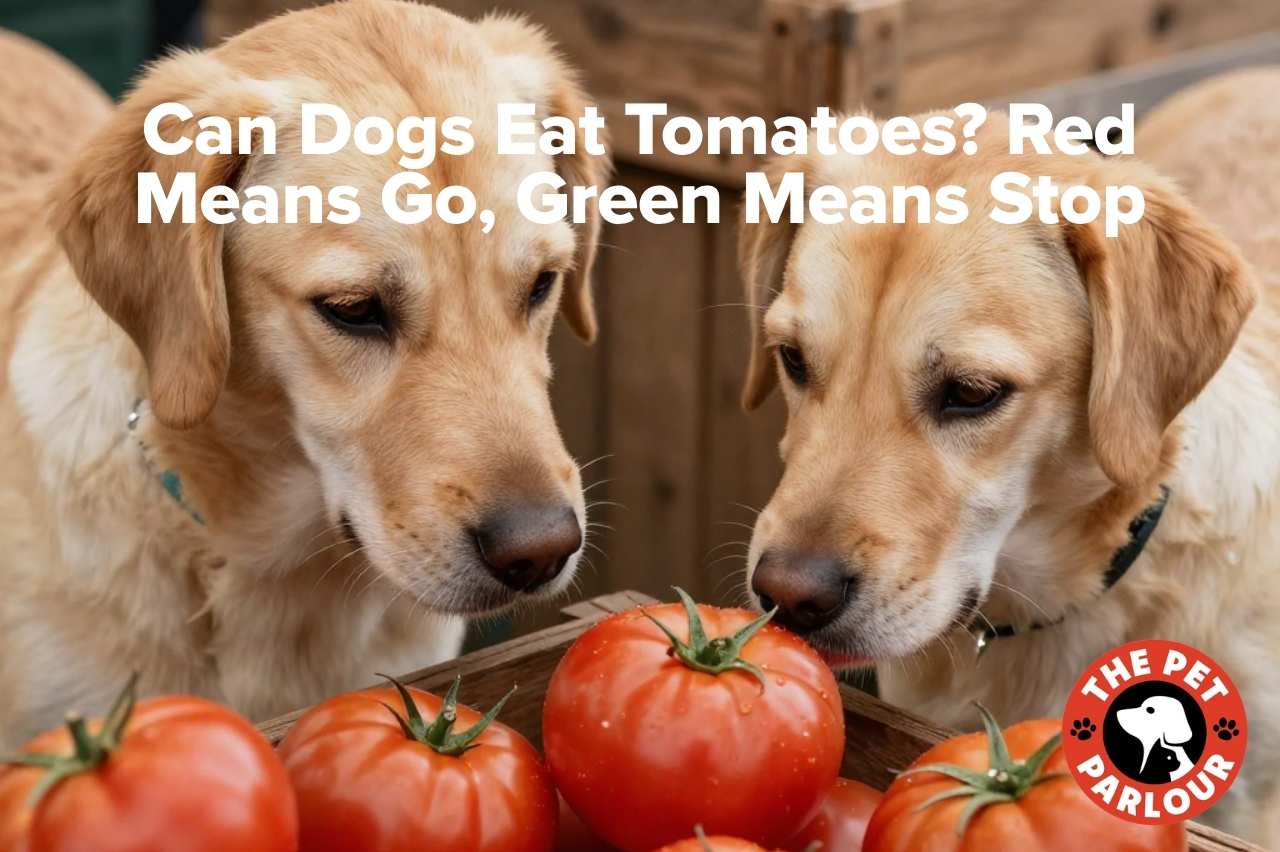
With tomatoes, the traffic lights are reversed. Red means go. Green means stop. A ripe, red tomato is safe for most dogs in small amounts. The green bits — the leaves, stems, vines and unripe fruit — are the part that can cause trouble. Once you hold onto that one rule, almost every tomato question answers itself.
The short answer
Yes, dogs can eat ripe red tomatoes in moderation. The flesh of a fully ripened tomato is considered non-toxic to dogs, and a few small pieces as an occasional treat won’t do any harm to a healthy adult dog. Tomatoes even bring a little something to the table: fibre for digestion, vitamin C, potassium and lycopene, the antioxidant that gives them their colour.
What dogs should never eat is any green part of the tomato plant. That includes the leaves, the stems, the vine, the flowers and unripe green tomatoes. It also means keeping an eye on dogs around growing plants — which, in an Irish summer, is exactly when the polytunnels and greenhouse grow-bags are heaving with them.
Why the colour matters
Tomatoes belong to the nightshade family, alongside potatoes and aubergines. Plants in this family produce natural compounds called glycoalkaloids as a defence against being eaten — in the tomato’s case, mainly tomatine, with smaller amounts of solanine. These compounds are concentrated in the green parts of the plant and in unripe fruit. As a tomato ripens, tomatine levels drop away to almost nothing, which is why the ripe red fruit is safe while the plant it grew on is not.
A dog would generally need to eat a fair quantity of green material to become properly unwell, and most cases of tomato-plant nibbling resolve with nothing worse than an upset stomach. But two things tip the scales: the size of the dog and the amount eaten. A puppy or a small breed can be affected by an amount a Labrador would shrug off. That is why we treat the green parts as off the menu entirely rather than “probably fine in small doses.”
Feeding ripe tomato safely
If you’d like to share a bit of tomato with your dog, keep it simple:
- Choose a fully ripe, red tomato with no green patches on the skin.
- Remove the stem, the calyx (the little green star on top) and any attached vine.
- Cut it into pieces suited to your dog’s size — halve or quarter cherry tomatoes for small dogs.
- Start with a small amount the first time and watch for any digestive upset, as some dogs find the acidity a bit much.
- Keep it occasional. Treats and extras of any kind should stay under roughly ten per cent of your dog’s daily food intake.
Cherry tomatoes are no different from big ones — ripe and red is fine, just mind the choking risk with smaller dogs and cut them up.
Cooked tomatoes, sauces and the pizza problem
Plain cooked tomato is safe in the same modest quantities as raw. The trouble with most cooked tomato in a real kitchen is everything that travels with it. Pasta sauces, pizza, tinned tomatoes with seasoning, ketchup and soups routinely contain onion, garlic, salt and sugar — all of which could cause an issue if ingested in larger amounts.
The Irish garden problem
Here’s the bit that catches people out. Nobody deliberately feeds their dog tomato leaves — but plenty of Irish gardens, balconies and allotments have a grow-bag or two on the go from June through September, and dogs are opportunists. Fallen green tomatoes lying in the grass are the classic culprit, because a dog can snaffle a couple during a mooch around the garden without anyone noticing.
If you grow your own, keep plants somewhere the dog can’t browse — a raised bed with a barrier, a closed polytunnel, or pots up out of reach — and do a quick sweep for windfalls after any blustery day, of which we are rarely short.
“My dog’s eaten a tomato” — what to actually do
A piece of ripe red tomato: nothing to do. At most, you might see a soft stool if your dog has a sensitive stomach.
Green tomatoes or plant material: how much and how big is the dog? A large dog that’s had a nibble of a leaf will almost certainly be grand, though it’s worth keeping an eye on them for the rest of the day. If a small dog or puppy has eaten green tomatoes or a decent amount of leaves and stems, or if you’re simply not sure how much went down, ring your vet for advice. Signs of tomatine poisoning usually involve the stomach first — drooling, vomiting, diarrhoea, loss of appetite — and in more significant cases weakness, lethargy, wobbliness on their feet, dilated pupils or a slow heart rate. Any of the latter group means a vet visit, not a wait-and-see.
The good news: even in confirmed cases, the outlook for tomato-plant ingestion is excellent with prompt care. It is an unpleasant day out rather than a catastrophe — but prompt beats patient every time.
Frequently asked questions
Can dogs eat cherry tomatoes?
Yes, if they’re ripe and red. Cut them up for small dogs to avoid a choking hazard, and keep quantities modest.
Can dogs eat cooked tomatoes?
Plain cooked tomato is fine in small amounts. Avoid sauces, tinned seasoned tomatoes, ketchup and pizza, which usually contain onion, garlic, salt or sugar.
Can puppies eat tomatoes?
A small piece of ripe tomato won’t harm a puppy, but their size means the margin for error with green plant material is much smaller. We’d keep puppies away from tomatoes and tomato plants altogether until they’re grown.
Are tomato plants poisonous to dogs?
Yes. The leaves, stems, vines and unripe fruit contain tomatine and solanine and should be kept out of reach. Serious poisoning is uncommon and usually requires a large amount, but small dogs and puppies are at greater risk.
My dog ate a green tomato — should I worry?
One green tomato in a healthy large dog is unlikely to cause more than a dodgy stomach. For small dogs, puppies, larger quantities, or any symptoms beyond mild tummy upset, ring your vet.
Still weighing up what goes in the bowl?
Curious about other foods? We’ve also looked at avocado and strawberries.
Tomatoes are a treat, not a diet — the real difference to your dog’s health is made by what’s in the bowl every day. If you’d like to talk through your dog’s feeding, whether that’s raw, cold pressed or just making sense of a label, book a one-to-one nutrition chat with Stephen at the shop in Terenure, or give us a ring on (01) 492 4566. We’re always happy to talk dogs.
Pet Parlour — Ireland’s independent specialists in raw, cold pressed and premium pet food. Free delivery across Ireland and Northern Ireland on orders over €49.
You might also be interested in:
HOW TO SWITCH YOUR DOG TO A RAW DOG FOOD DIET
THE BENEFITS OF A RAW FOOD DIET: HEALTH AND WELLBEING UNLEASHED